
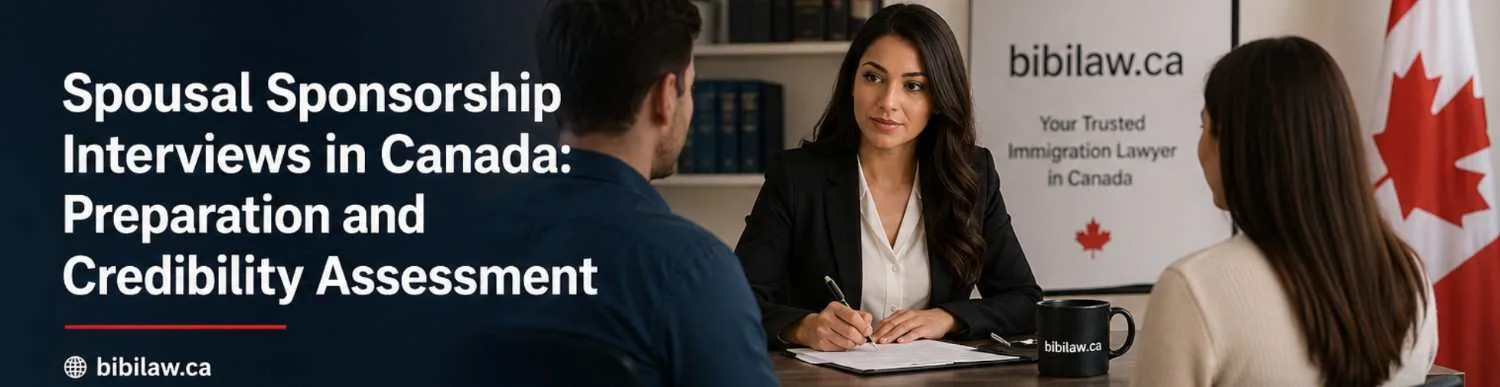
Introduction: The Moment That Can Define Your Application
For many couples applying for spousal sponsorship in Canada, the interview stage is where everything becomes real.
It’s not just paperwork anymore. It’s not just forms, timelines, or documents.
It’s your relationship under scrutiny.
A Spousal Sponsorship Interviews Canada is designed to answer one core question:
Is this relationship genuine, or is it primarily for immigration purposes?
And here’s the truth: most applicants don’t fully understand:
Approval doesn’t depend only on your documents.
It depends on how convincingly your relationship stands up to questioning.
At bibilaw.ca, we’ve seen cases approved with minimal documentation and others refused despite strong files, simply because the interview raised doubts.
This guide will break down exactly how to prepare, how credibility is assessed, and what actually works in real-world interviews.
What Is a Spousal Sponsorship Interview?
A spousal sponsorship interview is conducted by an Immigration Officers Assess Credibility when they need additional clarity about your relationship.
Not every application requires an interview. But when one is scheduled, it usually means:
- There are inconsistencies in your application
- The relationship timeline raises questions
- There is insufficient supporting evidence
- Cultural, language, or age differences need clarification
The purpose is not to trap you but to verify authenticity.
However, the process can feel intense, detailed, and sometimes uncomfortable.
Why Interviews Are Triggered (The Real Reasons)
Many applicants believe interviews happen randomly.
That’s incorrect.
There are specific red flags that often trigger them:
1. Weak Documentation
If your application lacks photos, proof of communication, or shared history, officers will need more assurance.
2. Inconsistent Information
Differences between forms, statements, or timelines can raise concerns.
3. Short Relationship Timeline
Quick marriages or limited in-person interaction can appear suspicious.
4. Cultural or Language Differences
These don’t automatically mean rejection, but officers may want a deeper understanding.
5. Previous Immigration History
Past refusals, visa issues, or sponsorships can increase scrutiny.
An interview does not mean rejection. It means verification.
How Immigration Officers Assess Credibility
This is where most applicants fail, not because their relationship isn’t real, but because they don’t understand how credibility works.
Officers evaluate three core areas:
1. Consistency
Your answers must align with:
- Your application forms
- Your partner’s answers
- Supporting documents
Even small contradictions can create doubt.
2. Detail and Natural Recall
Genuine relationships naturally include:
- Specific memories
- Emotional context
- Everyday details
Generic or rehearsed answers feel artificial.
3. Behavioral Cues
Officers observe:
- Body language
- Tone of voice
- Reaction time
Hesitation, over-explanation, or nervous contradictions can raise red flags.
4. Relationship Dynamics
They assess:
- Who knows what about whom
- Daily communication habits
- Plans
A real relationship shows depth, not just surface-level knowledge.
Common Interview Questions (And What They Really Test)
Let’s break down typical questions and their underlying purpose:
Relationship History
- How did you meet?
- When did your relationship become serious?
Testing: Timeline consistency and emotional authenticity
Daily Life
- How often do you communicate?
- What does your partner do daily?
Testing: Real involvement in each other’s lives
Family and Social Connections
- Have you met each other’s families?
- Who attended your wedding?
Testing: Integration into each other’s lives
Personal Details
- What are your partner’s habits, preferences, and routines?
Testing: Depth of knowledge
Future Plans
- Where will you live?
- What are your long-term goals?
Testing: Genuine intent beyond immigration
How to Prepare Effectively (What Actually Works)
Preparation is not about memorizing answers.
It’s about alignment, clarity, and confidence.
1. Review Your Entire Application
You must know your file inside out:
- Dates (meeting, engagement, marriage)
- Travel history
- Communication patterns
If your answers don’t match your file, credibility drops immediately.
2. Practice With Your Partner
Do mock interviews together.
Focus on:
- Natural conversation
- Matching timelines
- Honest recall
Avoid scripted responses.
3. Organize Supporting Evidence
Bring clear, structured proof:
- Photos (chronological)
- Chat logs
- Travel records
- Financial ties
Do not overwhelm. Present relevant, clean evidence.
4. Be Honest, Even About Imperfections
No relationship is perfect.
If there are gaps, conflicts, or unusual elements:
Explain them honestly.
Trying to hide or fabricate details creates more risk than transparency.
5. Stay Calm and Composed
Nervousness is normal.
But excessive anxiety can affect how your answers are perceived.
Focus on:
- Listening carefully
- Answering directly
- Staying consistent

Mistakes That Lead to Refusal
These are the most common reasons genuine applications fail:
Over-rehearsed answers
Contradictions
Lack of detail
Defensive behavior
Fake or misleading documents
How to Build Strong Credibility
Credibility isn’t built in the interview. It’s been built long before it.
Here’s what strengthens your case:
Consistent communication history
Shared experiences
Social recognition
Future planning
What Happens After the Interview?
After the interview, the officer will:
- Review your responses
- Compare them with your application
- Assess overall credibility
Possible outcomes:
Approval
Refusal
Further review with additional document requests
Can You Avoid an Interview?
In many cases, yes.
Strong applications often eliminate the need for interviews.
To reduce the risk:
- Submit complete, well-documented applications
- Maintain consistency across all forms
- Provide clear relationship evidence
A well-prepared file answers questions before they are asked.

Final Thoughts: This Is Not Just an Interview, It’s a Test of Authenticity
A spousal sponsorship interview is not about perfection.
It’s about truth, consistency, and clarity.
Real relationships don’t need scripts, but they do need preparation.
At bibilaw.ca, we focus on building applications that don’t just look strong on paper but hold up under real scrutiny.
Because in the end:
Documents get you to the interview.
Credibility gets you approved.
Need Help Preparing for Your Interview?
If you want expert guidance, mock interview preparation, or a full review of your application:
Visit bibilaw.ca
Get clarity. Get prepared. Get approved.
Spousal Sponsorship Interviews Canada. Spousal Sponsorship Interviews Canada. Spousal Sponsorship Interviews Canada. Spousal Sponsorship Interviews Canada. Spousal Sponsorship Interviews Canada. Spousal Sponsorship Interviews Canada. Spousal Sponsorship Interviews Canada. Spousal Sponsorship Interviews Canada. Spousal Sponsorship Interviews Canada. Spousal Sponsorship Interviews Canada. Spousal Sponsorship Interviews Canada. Spousal Sponsorship Interviews Canada. Spousal Sponsorship Interviews Canada. Spousal Sponsorship Interviews Canada. Spousal Sponsorship Interviews Canada.